 Shanxi Huan Guan Heavy Industry Large Flange Manufacturer

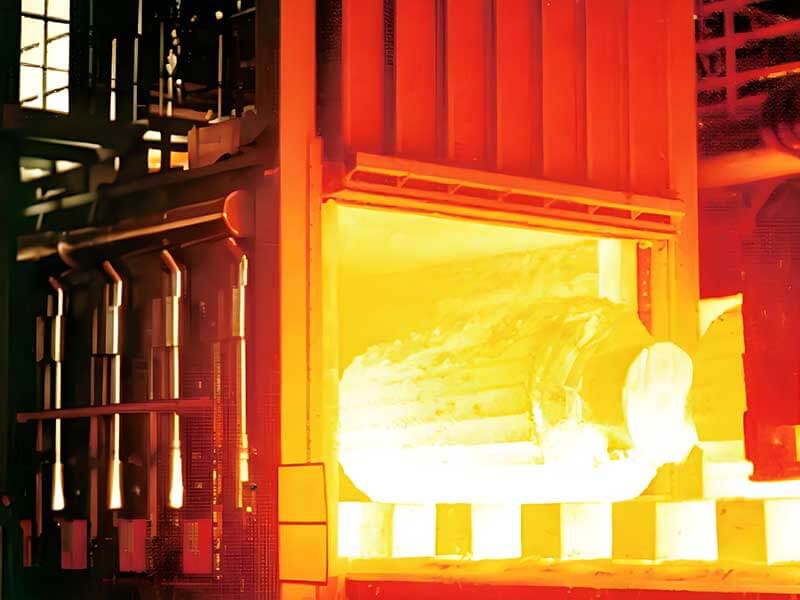
4000-ton press successfully put into production Congratulations Shanxi Huan Guan Heavy Industry Group
11334000-ton press successfully put into production Congratulations Shanxi Huan Guan Heavy Industry Group
View Full VersionPlease enter the keywords you want to search Site-wide search Product News
Forgings are not always tempered after forging.
Whether or not forgings need to be tempered during the manufacturing process depends on their specific application requirements and performance needs. Tempering is a heat treatment process designed to improve the comprehensive mechanical properties of steel materials, through the quenching and then high temperature tempering treatment, so that the steel parts to obtain a good match of strength and toughness. For some important structural parts, especially those that need to work under alternating loads, the tempering treatment is necessary because it can provide high strength and excellent toughness, plasticity, cutting properties, etc.
However, not all forgings require tempering. For example, some forgings may be able to meet performance requirements by normalizing them directly after forging, especially for parts that do not have high performance requirements. In addition, some customers may believe that the hardness of a forging is sufficient and that no further tempering is required, but this approach ignores factors such as tissue changes and stress relief.
In recent years, in order to save energy and reduce manufacturing costs, countries have developed mechanical structural steels that do not require tempering heat treatment, i.e. non-tempered mechanical structural steels. These steels are "micro-alloyed" by adding very small amounts of special elements to carbon and alloy structural steels to stop grain growth and strengthen material properties. These materials excel in continuous cooling precipitation strengthening, especially carbide and nitride strengthening at V.
In summary, the need for tempering of forgings depends on their specific application scenario and performance requirements. For parts that require good overall mechanical properties and operate under alternating loads, tempering is necessary. However, for parts that do not have high performance requirements or parts that can meet the requirements through other heat treatment methods, tempering may not be necessary.
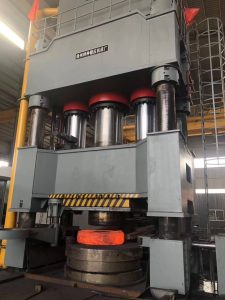
4000-ton press successfully put into production Congratulations Shanxi Huan Guan Heavy Industry Group
View Full Version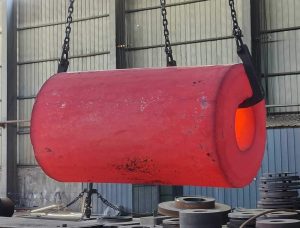
Stainless steel common smelting, forging, rolling problems Shrinkage: The shrinkage cavity formed when the steel shrinks in the steel mold is called shrinkage. Transverse cracks: transverse cracks occurring on the surface of the ingot, generally on the ingot, generally shallow depth, can be removed by fine grinding. Longitudinal cracks: longitudinal cracks occurring on the surface of the ingot, generally in the upper part of the ingot and the corners, and the upper part of the crack is very deep, it is difficult to grind to eliminate. ...
View Full Version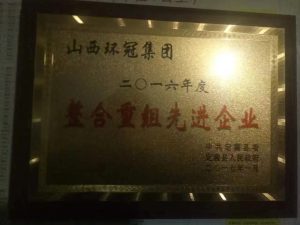
Integration and Reorganization of Sanyou Forge and Shanxi Huanguan Group
View Full Version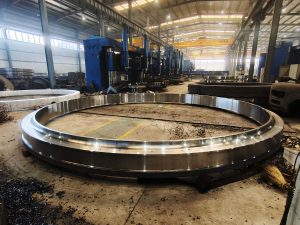
Our company is specializing in the production of: wind power tower flange, wind power brake disk flange, wind power spindle and autoclave flange, glass kettle flange, pressure vessel flange, elbow fittings, shaft forgings, ring forgings, cylinder forgings, wheel forgings, pipe plate blind plate, rotary kiln big gear ring big gear, rotary furnace big gear ring big gear, ball mill big gear ring big gear, rotary kiln wheel with roller ring, ball mill...
View Full Version

Hello!sign in